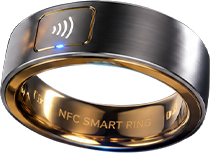
A bank wants wearable payment without rebuilding its issuance system. A company wants to know if its wellness program is working, without watching any one employee. A care facility wants to know what happens between rounds. An insurer wants pricing that reflects someone's actual health, not a form filled out years ago.
Anvor was built to answer all four without becoming four different products.
For banking partners, Anvor's payment capability runs on the Surnia Tokenization Platform, integrated through an SDK directly into the issuance systems institutions already operate. Provisioning, loss reporting, and limit management stay exactly as they were; the ring becomes one more entry point, not a system to maintain on its own.
For corporate health programs, bulk provisioning and anonymized aggregation are treated as a single design assumption. Once employees opt in, heart rate, sleep, and activity data reach the organization only as de-identified trends, never any individual's data.
For care institutions, continuous heart rate and activity data flow to care teams between scheduled rounds, surfacing signals like unusual overnight heart rate or lower-than-normal activity, without asking the ring to replace human judgment.
For insurers, heart rate and activity data can feed into an institution's own risk models, with explicit user authorization and no effect on basic coverage for those who decline. The weighting and pricing logic stay with the insurer's actuarial team; only the data gets more current.
The pattern across all four is the same. Anvor doesn't ask an institution to build something new around it. It asks to be connected to what already exists, and to keep doing that quietly, one wearer at a time. As more sectors look for continuous, low-friction data, that same infrastructure model is what Anvor is building toward next: fewer new systems, more places the ring already fits.