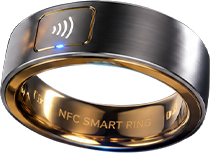
Strip away the ring's size, and what's left is a fairly serious piece of medical-adjacent hardware. Anvor pairs a single-lead ECG sampling at up to 512 Hz with synchronized PPG acquisition, feeding a blood pressure estimation engine and a high-resolution ADC built to catch signals most consumer wearables aren't sensitive enough to register. Heart rate, HRV, SpO2, respiratory rate, skin temperature, sleep stage, and daytime stress all come from the same handful of sensors, running continuously, for up to seven days per charge.
None of that is the interesting part on its own. Sensors are common; what a device does with them isn't. Anvor's app turns the raw stream into things a person can actually act on: a daily readiness score, ECG results classified into sinus rhythm, atrial fibrillation, tachycardia, and several other categories, four-tier diabetes risk assessment, and six-category blood pressure classification, alongside the ordinary sleep and activity tracking most rings already offer.
The next layer is where Anvor is headed rather than where it already is. An AI health companion is built to learn a wearer's personal baseline over months, not days, and flag drift in resting heart rate or sleep quality before it becomes something a person would notice on their own. Paired with AI-driven nutrition insight, training plans, and weight management built on the same continuous data, the ambition is a ring that moves from reporting numbers to making a case for what to do about them, still leaving the decision with the person wearing it.
On the payment side, the same sensor-and-chip footprint carries a secure EMV chip and NFC payment capability, tap-to-pay ready once activated, with real card numbers never stored on the ring itself.